

Tension-Type Headache: Causes, Relief and Prevention
Tension-type headache is the most common type of headache. It usually feels like a tight band or pressure around the head and is often linked to stress, posture, tiredness or dehydration.
Most tension-type headaches are mild to moderate and settle with rest, fluids and simple painkillers. When they become frequent, a change of approach is often needed.
This page explains how tension-type headache is recognised, how to treat and prevent it safely, and when headache symptoms need urgent assessment.
These articles are intended as educational sources, not diagnostic nor taking place of a proper medical assessment. If you need help, please book an appointment with one of our GP’s.
What is tension-type headache?
Tension-type headache typically causes:
- A dull, pressing or tight ache, often on both sides of the head
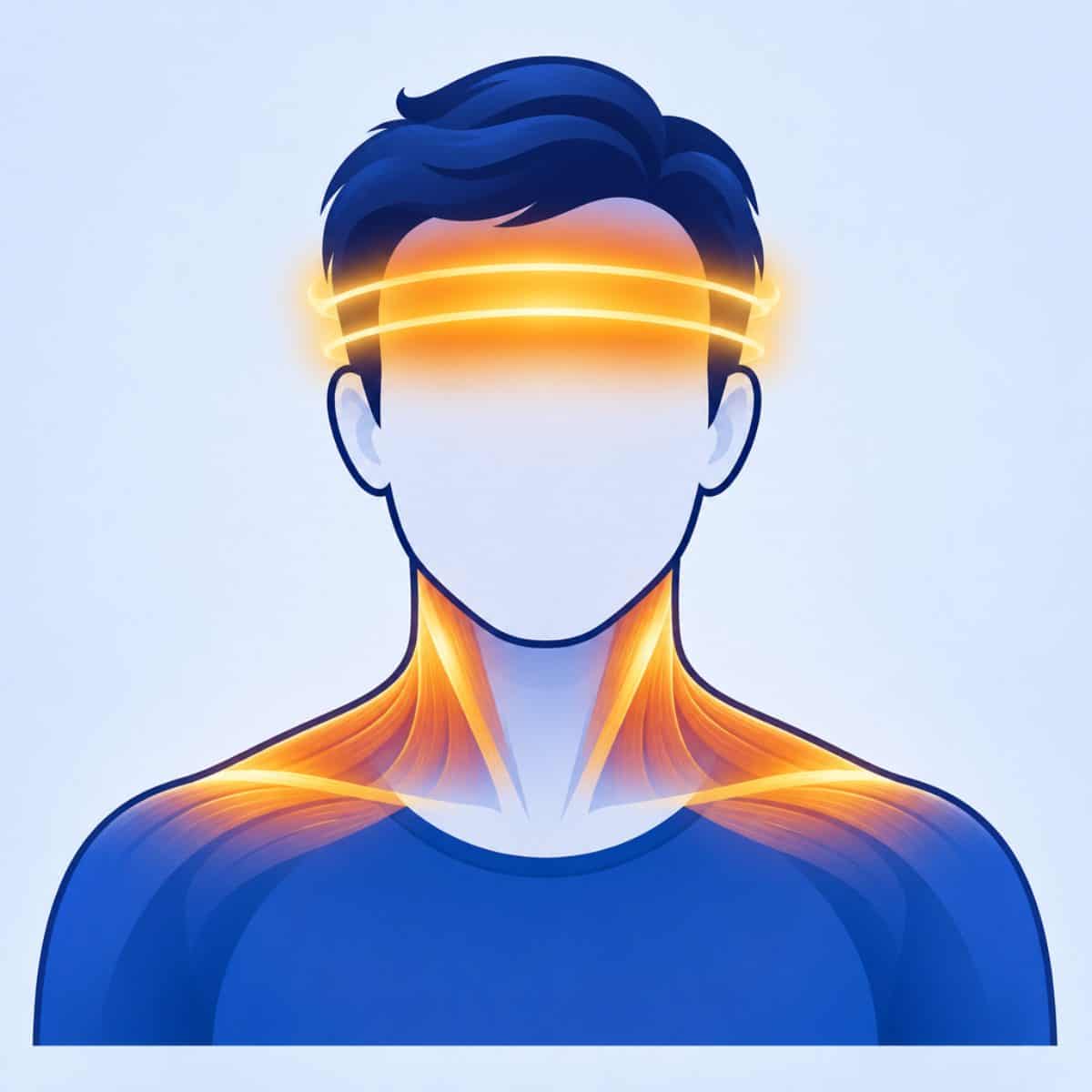
- A feeling of a band around the forehead or pressure behind the eyes
- Tenderness in the scalp, neck or shoulder muscles
- Pain that does not usually worsen with routine activity
- Little or no nausea
Episodes can last from 30 minutes to several days. Headaches on 15 or more days a month for at least 3 months are called chronic tension-type headache.
How tension-type headache is diagnosed
A GP makes the diagnosis from your symptoms and the pattern of your headaches. Scans and blood tests are not usually needed when the history is typical and there are no warning signs.
A GP will also ask about the painkillers you take and how often, because frequent use can cause medication overuse headache, which looks very similar.
Common causes and triggers
Tension-type headache often has more than one contributing factor.
Stress and anxiety
Emotional stress is one of the most common triggers and often sits alongside poor sleep.
Posture and screen time
Long periods at a desk or looking down at a phone can strain the neck and shoulders.
Tiredness and poor sleep
Not getting enough good-quality sleep makes headaches more likely.
Dehydration and missed meals
Not drinking enough or going long periods without food can bring on a headache.
Eye strain
Uncorrected vision or long periods of close work can contribute. A regular eye test is worthwhile.
Frequent painkillers
Taking painkillers on many days can make headaches more frequent rather than less.
Treating a tension-type headache
For an occasional headache, simple measures are usually enough:
- Paracetamol, ibuprofen or aspirin at the recommended dose
- Drinking water and having something to eat
- A short break from screens and a change of position
- Gentle neck and shoulder stretches
Opioid painkillers such as codeine are not recommended for tension-type headache. They can make headaches worse over time.

When headaches become frequent
If you have headaches on many days, the priority is to break the cycle rather than take more painkillers:
- Limit simple painkillers to fewer than 15 days a month
- Keep a headache diary for a few weeks
- Look at sleep, stress and screen habits
- Ask a GP about preventive options
For chronic tension-type headache, a course of acupuncture is recommended in UK guidance. Some people are offered low-dose amitriptyline as a preventive treatment.

Stress, sleep and headaches
Stress and poor sleep feed into each other and into headaches. Helpful steps include:
- Keeping a regular bedtime and wake time
- Building in short breaks during the working day
- Regular exercise, which reduces headache frequency
- Relaxation or breathing techniques
If stress, low mood or anxiety are a big part of the picture, it is worth discussing these directly with a GP, as treating them often improves headaches too.

Posture and your working day
Small changes at work can help prevent headaches:
- Set your screen at eye level and an arm’s length away
- Keep your shoulders relaxed and feet flat on the floor
- Stand up and move at least once an hour
- Use the 20-20-20 rule: every 20 minutes, look 20 feet away for 20 seconds
If headaches started after a change in glasses, a new screen or a new job, these may be clues to the cause.

How an online GP can help
Tension-type headache is well suited to an online consultation. A GP can:
- Confirm the type of headache from your history
- Check for medication overuse
- Discuss preventive treatment where appropriate
- Look at related issues such as sleep, stress or mood
- Identify any features that need further assessment
A headache diary covering 2 to 4 weeks is very helpful to bring to the appointment. If stress or burnout is part of the picture, see our stress and burnout GP service, or book a medication review to look at your painkiller use.

When to seek help
Book a GP review if:
- You have headaches on more than a few days each week
- Your headaches are changing or getting worse
- You are taking painkillers on most days
- Headaches are affecting work, sleep or mood
Get urgent help if you have any of the warning signs below.
When to seek urgent medical help
Call 999 or go to A&E immediately if:
- A sudden, very severe headache that peaks within a minute or two
- Headache with a high temperature, stiff neck or a new rash
- New weakness, numbness, drooping of the face or slurred speech
- New confusion, drowsiness or a seizure
- A headache after a head injury
- A new headache with sudden loss of vision or a painful red eye
These symptoms can be signs of a serious condition and need emergency assessment.

Frequently asked questions
What does a tension headache feel like?
Usually a dull, tight or pressing pain on both sides of the head, like a band around the forehead. It is not usually throbbing and rarely causes vomiting.
How long does a tension-type headache last?
Anywhere from 30 minutes to several days. Most episodes settle within a few hours with rest and simple painkillers.
Can stress cause daily headaches?
Yes. Stress is a common trigger, and frequent painkiller use during stressful periods can add medication overuse headache on top.
Is it a tension headache or a migraine?
Migraine is usually throbbing, one-sided, worse with activity and comes with nausea or light sensitivity. Some people have both types.
Can an online GP help with frequent headaches?
Yes. A GP can review the pattern of your headaches, check for medication overuse and discuss prevention.
Further Reading and Hub Links
Visit our Brain and Nerve Health hub or browse more health topics in the AccessGP Knowledge Base. Our guide to pain relief and anti-inflammatory medicines may also help. For more on headaches, see the NHS guide to tension headaches.
If you would like a GP to review frequent headaches, check your painkiller use or talk through prevention, you can book an online appointment at a time that suits you. Our GMC-registered GPs offer same-day or next-day video and telephone consultations.
AccessGP Services
Our GMC-registered GPs offer same-day or next-day video and telephone consultations, providing convenient access to medical advice when you need it.
What We Offer:
Locations We Serve:
Available to patients in Sevenoaks, Warwick, Peterborough, Hornchurch, Newcastle upon Tyne, Birmingham and throughout England.
Reviewed by Dr Zamiel Hussain, GP · GMC number 7486123 (check the GMC register) · About Dr Hussain
Updated: 21 November 2026