

Medication Overuse Headache: Breaking the Painkiller Cycle
Medication overuse headache happens when painkillers or migraine medicines, taken too often, start to cause headaches themselves. It is common, often missed and very treatable.
It usually affects people who already have migraine or tension-type headache and find themselves taking tablets on more and more days. The headaches become more frequent and the tablets work less well.
This page explains how medication overuse headache is recognised, how to stop the cycle safely and how to prevent it coming back.
These articles are intended as educational sources, not diagnostic nor taking place of a proper medical assessment. If you need help, please book an appointment with one of our GP’s.
What is medication overuse headache?
Medication overuse headache is likely if you have a headache on 15 or more days a month and, for more than 3 months, you have taken:
- Triptans, opioid painkillers such as codeine, or combination painkillers on 10 or more days a month
- Simple painkillers such as paracetamol, ibuprofen or aspirin on 15 or more days a month
- A mixture of these on 10 or more days a month
The headache is often present on waking and may feel like your usual headache or migraine, but more frequent and harder to treat.
How it is diagnosed
A GP makes the diagnosis from your headache history and a careful review of every medicine you take for pain, including those bought over the counter.
Counting tablet days accurately is the key step. A headache and medicine diary for a few weeks gives the clearest picture.
Medicines that can cause it
Almost any medicine taken regularly for headache can contribute, but some carry a higher risk.
Codeine and other opioids
These carry the highest risk, are not recommended for headache and can cause dependence.
Combination painkillers
Products combining paracetamol with codeine or caffeine are a common cause.
Triptans
Very effective for migraine, but should be used on fewer than 10 days a month.
Paracetamol
Safe for occasional use, but daily use for headache can maintain the cycle.
Anti-inflammatories
Ibuprofen, naproxen and aspirin can also cause medication overuse headache when taken most days.
Caffeine
Regular high caffeine intake and caffeine withdrawal can both drive daily headaches.
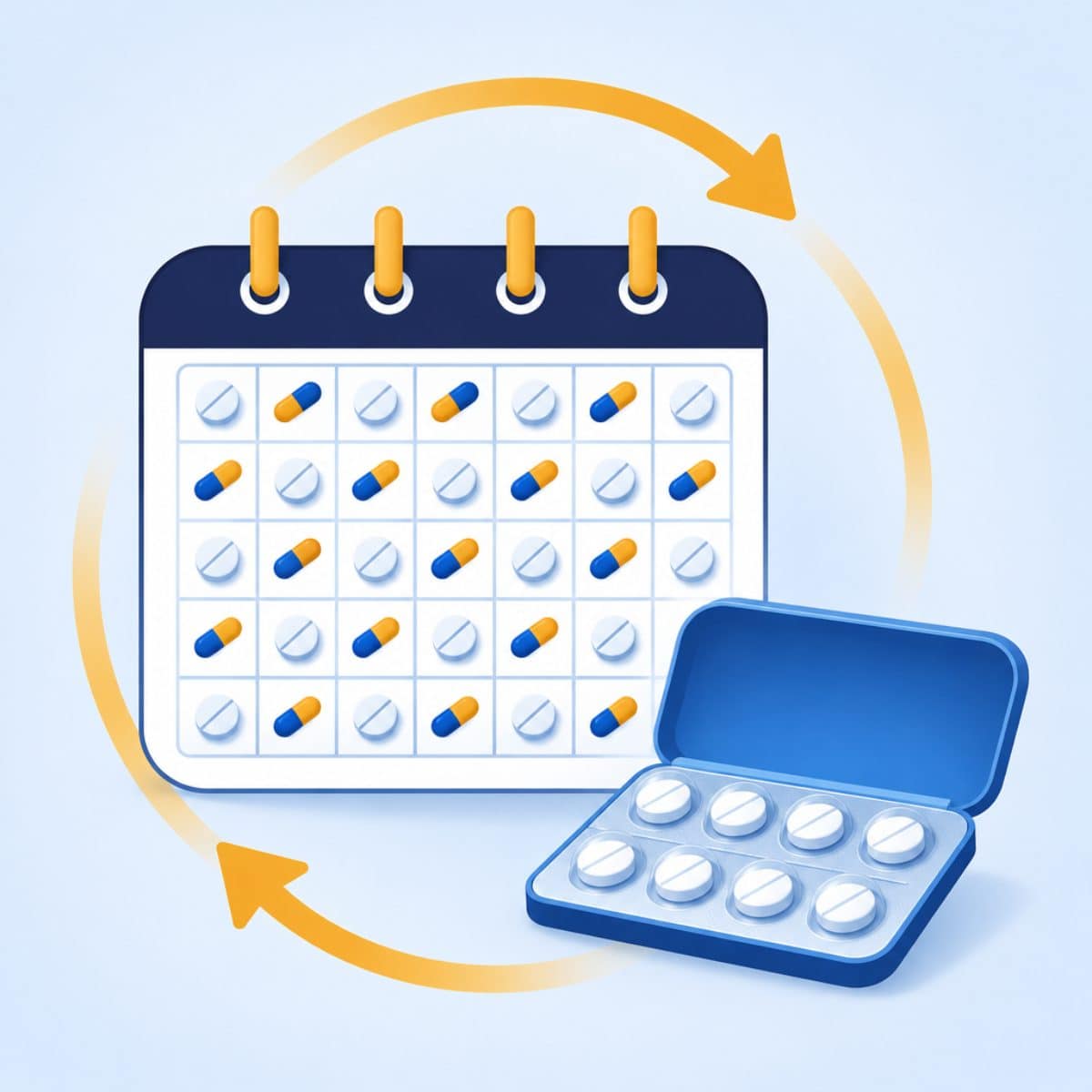
How medication overuse headache is treated
The main treatment is to stop or reduce the medicines that are being overused. A GP will usually advise:
- Stopping simple painkillers and triptans completely, usually straight away
- Reducing opioid painkillers gradually if you have been taking them regularly
- Planning the withdrawal for a time when you can rest
- Arranging a review after 4 to 8 weeks
Do not stop opioid painkillers suddenly if you have taken them every day for a long time without speaking to a GP first.

What to expect when you stop
Stopping can be difficult at first, and knowing what to expect helps:
- Headaches often get worse for the first week or two
- You may feel sick, restless or have poor sleep for a short time
- Most people notice improvement within 2 to 8 weeks
- Your original headache pattern usually becomes clearer
Support from a GP during this period makes it more likely to succeed. Having a plan for what to do on bad days is important.

Preventing headaches from returning
Once the cycle is broken, the aim is to stop it starting again:
- Limit simple painkillers to fewer than 15 days a month
- Limit triptans to fewer than 10 days a month
- Avoid codeine-based painkillers for headache
- Keep a diary to track tablet days
If you have frequent migraine, a preventive medicine can reduce how often you need acute treatment. This is often started at the same time as withdrawal.

Habits that help
Day-to-day habits support recovery:
- Regular sleep and meal times
- Drinking enough water
- Reducing caffeine gradually rather than suddenly
- Regular exercise and time outdoors
- Ways to manage stress
Many people find that their headaches are much better controlled once they are taking fewer painkillers, even though it may seem the opposite at first.

How an online GP can help
Medication overuse headache is well suited to an online consultation. A GP can:
- Review every medicine you take for headache
- Confirm whether medication overuse is likely
- Plan a safe withdrawal and follow-up
- Start preventive treatment where appropriate
- Look for any other cause of daily headaches
Bring a list of everything you take for pain, including shop-bought products, and how many days a month you take each one. A GP medication review is a good way to plan stopping safely.

When to seek help
Book a GP review if:
- You have a headache on most days
- You are taking painkillers on more than half the days in a month
- Your migraine treatment seems to be working less well
- You are worried about stopping your painkillers
Get urgent help if you have any of the warning signs below.
When to seek urgent medical help
Call 999 or go to A&E immediately if:
- A sudden, very severe headache that peaks within a minute or two
- Headache with a high temperature, stiff neck or a new rash
- New weakness, numbness, drooping of the face or slurred speech
- New confusion, drowsiness or a seizure
- A headache after a head injury
- Vomiting that will not settle, so you cannot keep fluids down
These symptoms are not typical of medication overuse headache and need emergency assessment.

Frequently asked questions
Can painkillers really cause headaches?
Yes. Taking painkillers or triptans on many days each month can make the brain more sensitive to pain, leading to more frequent headaches.
Is it safe to stop painkillers suddenly?
Simple painkillers and triptans can usually be stopped straight away. Opioid painkillers taken daily should be reduced gradually with GP advice.
How long until I feel better?
Most people notice improvement within 2 to 8 weeks of stopping, although the first week or two can be harder.
What can I take while I am stopping?
A GP may suggest a short-term plan for bad days or start a preventive medicine. This should be agreed in advance.
Will my headaches come back?
They can, if regular painkiller use creeps back in. Keeping a diary and limiting tablet days helps prevent this.
Further Reading and Hub Links
Visit our Brain and Nerve Health hub or browse more health topics in the AccessGP Knowledge Base. Our guide to pain relief and dependence may also help. For more information, see the NHS guide to headaches.
If you are taking painkillers on most days and would like help breaking the cycle, you can book an online appointment at a time that suits you. Our GMC-registered GPs offer same-day or next-day video and telephone consultations.
AccessGP Services
Our GMC-registered GPs offer same-day or next-day video and telephone consultations, providing convenient access to medical advice when you need it.
What We Offer:
Locations We Serve:
Available to patients in Sevenoaks, Warwick, Peterborough, Hornchurch, Newcastle upon Tyne, Birmingham and throughout England.
Reviewed by Dr Zamiel Hussain, GP · GMC number 7486123 (check the GMC register) · About Dr Hussain
Updated: 21 November 2026