

Cluster Headache: Symptoms, Attacks and Treatment
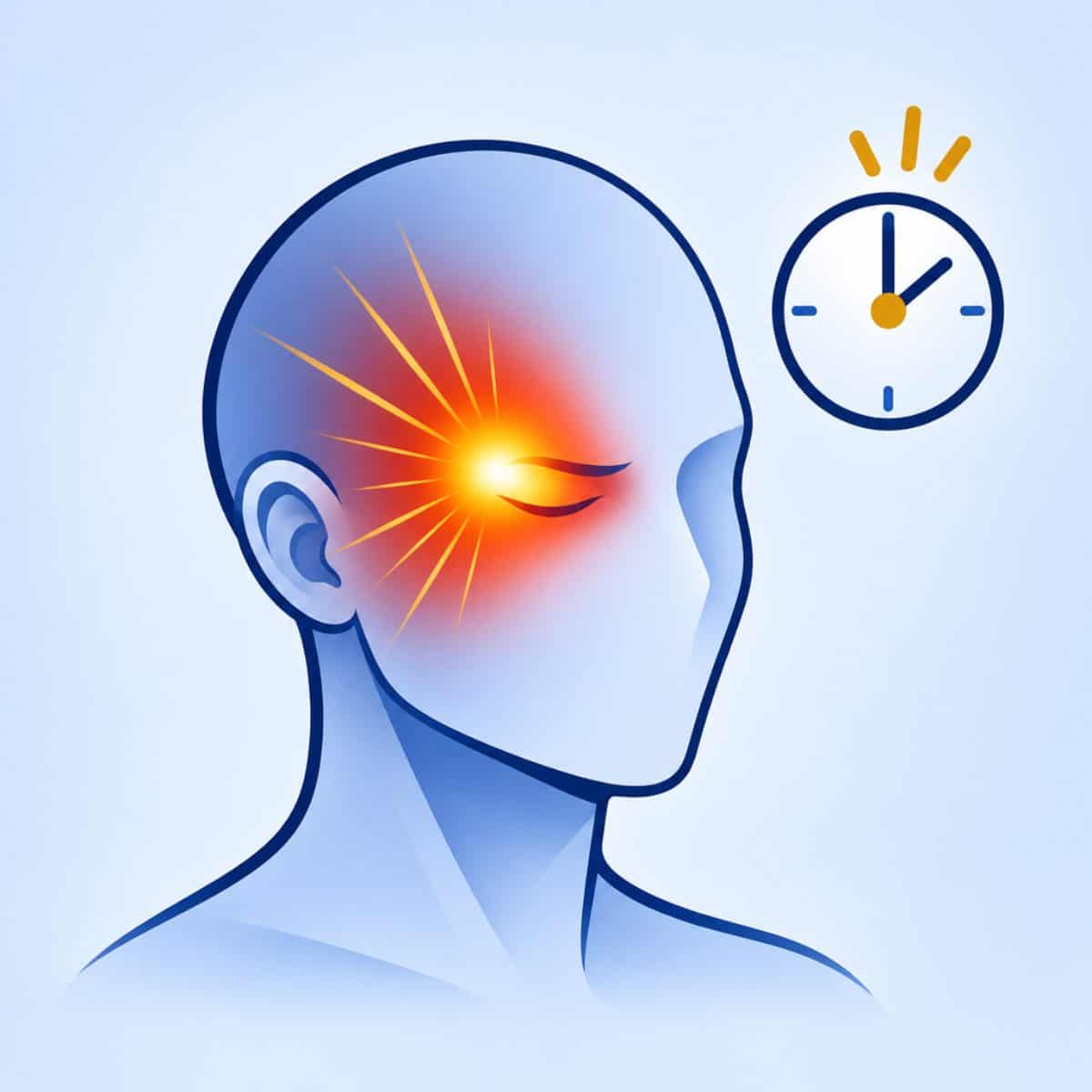
Cluster headache is a rare but extremely painful type of headache. Attacks cause severe pain around one eye or temple and tend to happen in clusters, often at the same time each day, for weeks or months at a time.
Cluster headache is not dangerous in itself, but the pain can be overwhelming. Fast-acting treatments can stop attacks, and preventive treatment can shorten a cluster period.
This page explains how cluster headache is recognised, the treatments available and why specialist assessment is recommended.
These articles are intended as educational sources, not diagnostic nor taking place of a proper medical assessment. If you need help, please book an appointment with one of our GP’s.
What is cluster headache?
Typical features of a cluster headache attack include:
- Severe, sharp or burning pain around one eye, temple or forehead, always on the same side during a bout
- Attacks lasting 15 minutes to 3 hours, up to several times a day
- A red or watering eye, a blocked or runny nostril, or a drooping eyelid on the same side
- Feeling restless or agitated, often pacing or rocking
- Attacks that often wake you at a similar time each night
Most people have episodic cluster headache, with bouts lasting weeks to months followed by pain-free periods. A smaller number have chronic cluster headache with little or no break.
How cluster headache is diagnosed
Diagnosis is based on the pattern of attacks. Many people are first thought to have migraine, sinus problems or dental pain, so a clear description of attacks is very important.
UK guidance recommends that anyone with suspected cluster headache is assessed by a headache specialist, who may arrange an MRI scan to rule out other causes.
Factors linked to cluster headache
The cause is not fully understood, but some patterns are well recognised.
Body clock
Attacks often follow a daily and seasonal rhythm, which points to the part of the brain that controls the body clock.
Alcohol during a bout
Even a small amount of alcohol can trigger an attack during a cluster period, but usually not between bouts.
Smoking
Cluster headache is more common in people who smoke. Stopping smoking is good for overall health.
Sex and age
It is more common in men and usually starts between the ages of 20 and 40, although anyone can be affected.
Sleep
Attacks often start during sleep. Keeping a regular sleep pattern may help.
Strong smells and heat
Some people find that solvents, perfumes or getting very hot can trigger attacks during a bout.
Treating a cluster headache attack
Ordinary painkillers do not work quickly enough for cluster headache. Treatments that can stop an attack include:
- Sumatriptan injections, which work within about 10 to 15 minutes
- Triptan nasal sprays, such as zolmitriptan or sumatriptan
- High-flow oxygen through a face mask, arranged by a specialist
Triptan tablets work too slowly to be useful for most attacks. Opioid painkillers are not recommended.

Preventing attacks during a bout
Preventive treatment aims to reduce the number of attacks and shorten the bout. Options are usually started or guided by a specialist and may include:
- Verapamil, which needs heart tracing (ECG) monitoring
- A short course of steroid tablets while other treatment takes effect
- Other preventive medicines if these are not suitable
Starting preventive treatment quickly at the beginning of a bout can make a big difference, so it helps to have a plan agreed in advance.

Living with cluster headache
Practical steps that can help during a bout include:
- Avoiding alcohol completely during a cluster period
- Keeping a regular sleep and wake time
- Keeping an attack diary with times and treatments
- Making sure treatment is to hand, including at night
Cluster headache can be isolating. Support from family, friends and patient charities such as OUCH UK can be very valuable.

Cluster headache and your mental health
Repeated severe attacks can be exhausting and frightening. It is common to feel:
- Anxious about the next attack
- Low in mood during a long bout
- Worried about work or driving
- Exhausted from broken sleep
Please talk to a GP if you are struggling. If you have thoughts of harming yourself, seek help immediately by calling 999, NHS 111 or Samaritans on 116 123.

How an online GP can help
An online GP can help you get the right care quickly. A GP can:
- Assess whether your symptoms fit cluster headache
- Prescribe a fast-acting treatment where appropriate
- Refer you to a headache specialist
- Review other medicines that may interact
- Provide a fit note if attacks are affecting work
Write down the timing, length and features of your attacks before the appointment, as this is the key to diagnosis. If a bout is starting, same-day GP appointments are available, and a fit note can be provided if attacks are affecting work. If an MRI scan is recommended, a GP can also refer you for a private MRI scan.

When to seek help
Book a GP review soon if:
- You have attacks of one-sided pain around the eye
- A known cluster bout is starting and you need treatment
- Your usual treatment is no longer working
- Attacks are changing in pattern
Get urgent help if you have any of the warning signs below.
When to seek urgent medical help
Call 999 or go to A&E immediately if:
- A sudden, very severe headache that peaks within a minute or two
- Headache with a high temperature, stiff neck or a new rash
- New weakness, numbness, drooping of the face or slurred speech
- A painful red eye with blurred vision or haloes around lights
- New double vision or a drooping eyelid that does not go away between attacks
- New confusion, drowsiness or a seizure
These symptoms can be signs of a serious condition, such as a bleed in the brain or acute glaucoma, and need emergency assessment.

Frequently asked questions
How is cluster headache different from migraine?
Cluster attacks are shorter, more severe and focused around one eye, with watering or a blocked nose on the same side. People with cluster headache tend to pace, while people with migraine prefer to lie still.
How long does a cluster bout last?
Bouts commonly last 6 to 12 weeks, but this varies. Many people have one bout a year, often at a similar time.
Do I need a scan?
A specialist may arrange an MRI scan to rule out other causes, especially at the first presentation.
Can I drink alcohol with cluster headache?
Alcohol is a common trigger during a bout, so it is best avoided completely during a cluster period.
Can an online GP prescribe treatment for cluster headache?
Where appropriate, an online GP can prescribe a fast-acting treatment and arrange a referral to a headache specialist.
Further Reading and Hub Links
Visit our Brain and Nerve Health hub or browse more health topics in the AccessGP Knowledge Base. Our guide to migraine medicines covers triptans in more detail. For more on cluster headache, see the NHS guide to cluster headaches.
If you think you may have cluster headache, or a bout is starting and you need a plan, you can book an online appointment at a time that suits you. Our GMC-registered GPs offer same-day or next-day video and telephone consultations.
AccessGP Services
Our GMC-registered GPs offer same-day or next-day video and telephone consultations, providing convenient access to medical advice when you need it.
What We Offer:
Locations We Serve:
Available to patients in Sevenoaks, Warwick, Peterborough, Hornchurch, Newcastle upon Tyne, Birmingham and throughout England.
Reviewed by Dr Zamiel Hussain, GP · GMC number 7486123 (check the GMC register) · About Dr Hussain
Updated: 21 November 2026