

Gallbladder symptoms: causes, assessment and GP guidance
Gallbladder problems most commonly relate to gallstones. These can cause characteristic upper abdominal pain, often triggered by meals, particularly fatty foods. Many people worry that ongoing indigestion or bloating may be related to the gallbladder, but true gallbladder symptoms usually follow a specific pattern.
This page explains how gallbladder symptoms typically present, how GPs assess them, which tests are used, and when urgent medical attention is needed.
These articles are intended as educational sources, not diagnostic nor taking place of a proper medical assessment. If you need help, please book an appointment with one of our GP’s.
What the gallbladder does
The gallbladder stores bile, which helps digest fats. When you eat, the gallbladder contracts and releases bile into the digestive system.
Gallstones form when bile components crystallise. Many people have gallstones without symptoms, and no treatment is needed unless symptoms occur.
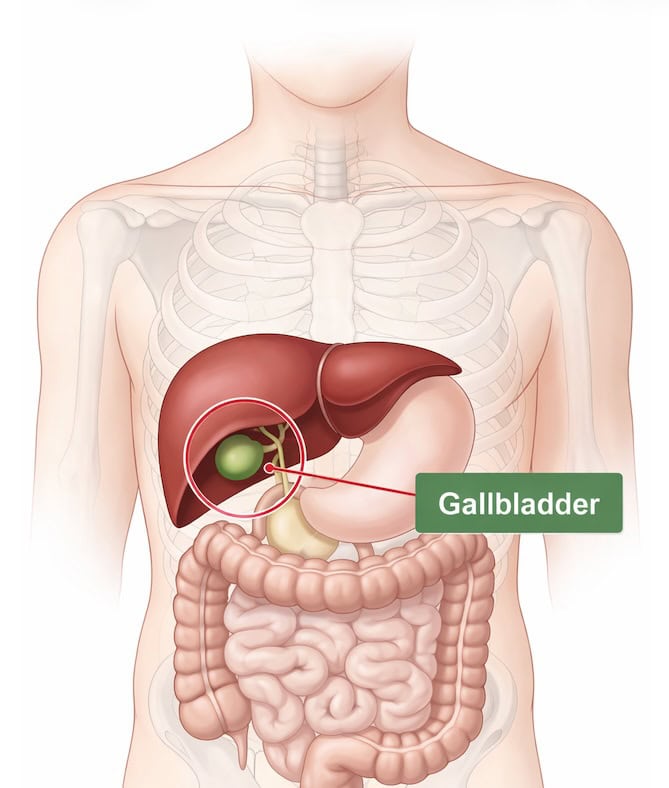
Typical gallbladder symptoms
Gallbladder pain often has recognisable features:
- Pain in the right upper abdomen or upper middle abdomen
- Pain that comes on after eating, especially fatty meals
- Pain lasting from 30 minutes to several hours
- Pain that may spread to the right shoulder or upper back
- Nausea or vomiting during pain episodes
This pattern is often referred to as biliary colic.
Symptoms that are less likely to be gallbladder related
Gallbladder disease is less likely if symptoms are:
- Constant daily bloating without pain
- Burning chest pain relieved by antacids
- Lower abdominal pain relieved by opening the bowels
- Pain related mainly to stress
These symptoms are more commonly linked to reflux, IBS or functional gut conditions.
- Severe or worsening upper abdominal pain lasting more than a few hours
- Fever or chills with abdominal pain
- Yellowing of the skin or eyes (jaundice)
- Dark urine or pale stools
- Persistent vomiting or feeling acutely unwell
Common gallbladder conditions
Gallstones
The most common cause of gallbladder symptoms. Many people have gallstones without symptoms.
Cholecystitis
Inflammation of the gallbladder, usually due to a blocked gallstone.
- Severe, persistent pain
- Fever
- Feeling unwell
This requires urgent medical assessment.
Biliary obstruction
A gallstone blocking bile ducts may cause:
- Jaundice
- Dark urine
- Pale stools
- Itching
This also needs urgent review.
How GPs assess gallbladder symptoms
Assessment usually includes:
- Detailed pain history and triggers
- Location, timing and duration of symptoms
- Examination of the abdomen
- Review of risk factors such as pregnancy, weight changes and family history
Symptoms are often enough to guide whether gallbladder disease is likely.
Tests used to assess gallbladder problems
Blood tests
Blood tests may include liver function tests (LFTs) to look for signs of bile duct obstruction or inflammation.
Liver function tests explained
Ultrasound scan
An abdominal ultrasound is the first-line test for gallstones.
- Non-invasive
- No radiation
- Highly effective at detecting gallstones
When surgery is considered
Gallbladder removal may be discussed if:
- Gallstones cause recurrent symptoms
- There are complications such as cholecystitis or pancreatitis
- Symptoms significantly affect quality of life
Self care and symptom management
If symptoms are mild or infrequent:
- Avoid large or very fatty meals
- Eat smaller, regular meals
- Stay well hydrated
Self care does not remove gallstones but may reduce symptom triggers.

When to seek GP review
Consider GP review if:
- You have recurrent upper abdominal pain after meals
- Symptoms are suggestive of gallstones
- You want advice on investigations or referral
- You are unsure whether symptoms are gallbladder related

Further Reading and Hub Links
Visit our Gut Health hub or browse more health topics in the AccessGP Knowledge Base.
If you have symptoms that may be related to gallbladder disease, a GP can assess your symptoms and advise on appropriate tests or referral.
AccessGP Services
Our GPs provide consultations through video or phone appointments.
What We Offer:
Locations We Serve:
Available to patients in Cambridge, Watford, Camden, Westminster, Mansfield, Chesterfield and throughout England.
Last reviewed by Dr Zamiel Hussain, GMC registered GP
Updated: 4 January 2026