
Bell’s Palsy: Sudden Facial Weakness Explained
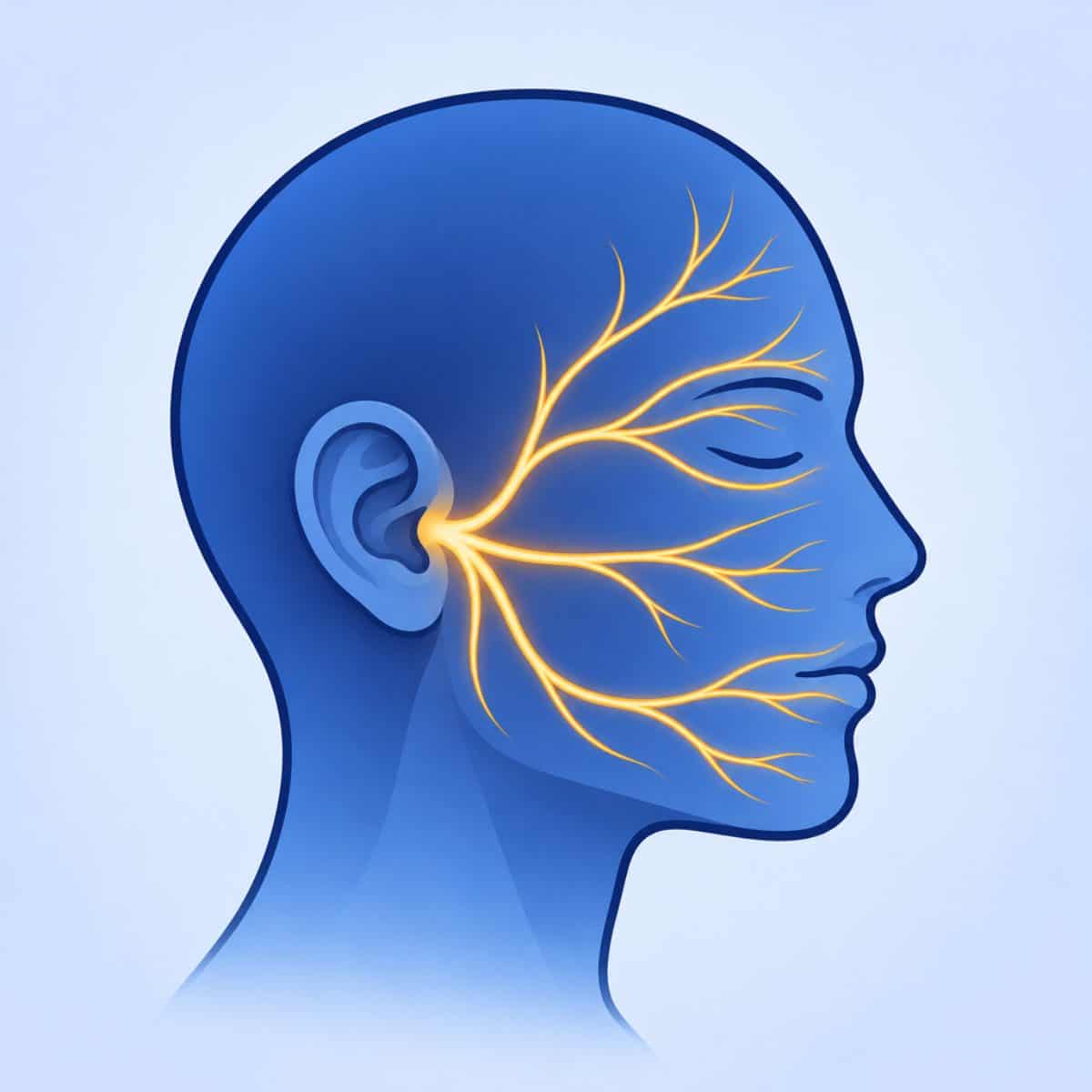
Bell’s palsy causes sudden weakness or drooping on one side of the face. It happens when the facial nerve becomes inflamed, and it usually develops over a few hours to a couple of days.
Most people recover fully. Treatment works best when it is started early, ideally within 72 hours of symptoms starting, so prompt assessment matters.
Because facial weakness can also be a sign of a stroke, it is important to know the difference and when to call 999.
These articles are intended as educational sources, not diagnostic nor taking place of a proper medical assessment. If you need help, please book an appointment with one of our GP’s.
What is Bell’s palsy?
Bell’s palsy affects the nerve that controls the muscles of one side of the face. Typical symptoms include:
- Drooping of the mouth and difficulty smiling on one side
- Being unable to close the eye fully or raise the eyebrow on that side
- Drooling or food collecting in the cheek
- Pain behind the ear, changes in taste or sensitivity to sound
- Symptoms developing over less than 72 hours
In Bell’s palsy the whole of one side of the face is affected, including the forehead. Weakness that spares the forehead is more suggestive of a stroke.
How Bell’s palsy is diagnosed
Bell’s palsy is diagnosed by examining the face and ruling out other causes. A GP will check facial movements, the eyes, ears and the rest of the nervous system.
Bell’s palsy is a diagnosis made when no other cause is found, so a GP will look carefully for features that point to something else, such as a rash in the ear, other nerve problems or weakness elsewhere.
Possible causes and links
The exact cause is often unknown, but several associations are recognised.
Viral infection
Inflammation of the facial nerve is thought to be linked to viruses, including the cold sore virus.
Pregnancy
Bell’s palsy is more common in late pregnancy and shortly after giving birth.
Diabetes
People with diabetes have a higher risk, and blood sugar should be checked.
Ramsay Hunt syndrome
Shingles affecting the facial nerve causes facial weakness with a painful blistering rash in or around the ear. This needs urgent treatment.
Lyme disease
A tick bite in the weeks before symptoms can be relevant, especially after time in woodland or grassland.
Ear problems
Ear infections or growths near the nerve can rarely cause facial weakness, so the ears are examined.
Treatment for Bell’s palsy
The main treatment is a short course of steroid tablets:
- Steroids reduce inflammation around the facial nerve
- They work best when started within 72 hours of symptoms starting
- A GP will check steroids are safe for you, for example if you have diabetes
- Antiviral tablets alone are not recommended for Bell’s palsy
If you notice facial weakness and a stroke has been ruled out, seek a GP assessment as soon as possible rather than waiting to see if it improves.
Protecting your eye
If your eyelid does not close properly, the eye can dry out and become damaged. Eye care is very important:
- Use lubricating eye drops during the day
- Use an eye ointment at night
- Tape the eyelid closed at night if advised, using medical tape
- Wear glasses or sunglasses outdoors to protect from wind and dust
Seek urgent help if your eye becomes painful, red or your vision changes, as this may mean the surface of the eye is damaged.

Recovery and what to expect
Most people with Bell’s palsy recover well:
- Many people notice improvement within 2 to 3 weeks
- Most recover fully within 3 to 6 months
- Recovery can be slower if the weakness was complete
- A small number of people have some lasting weakness
If you see no improvement after 3 weeks, or recovery is incomplete, a GP can refer you to a specialist for further assessment and support.

Coping day to day
Facial weakness can affect eating, speaking and confidence. Things that may help include:
- Eating small mouthfuls and chewing on the unaffected side
- Rinsing your mouth after eating
- Gentle facial exercises, if advised by a specialist
- Speaking to a GP if you feel low or anxious
Changes to your appearance can be upsetting, even if temporary. Support is available, including from the charity Facial Palsy UK.
How an online GP can help
Video consultations are well suited to assessing facial weakness quickly. A GP can:
- Look at your facial movements and eye closure
- Check for features that need emergency assessment
- Prescribe steroid treatment within the 72-hour window where appropriate
- Advise on eye protection and arrange follow-up
- Refer you if recovery is not progressing
If you have any warning signs of a stroke, do not book an online appointment. Call 999 straight away. Because timing matters, same-day GP appointments are available 7 days a week.
When to seek help
Book a GP review urgently if:
- You have new weakness on one side of the face
- Symptoms started within the last few days
- Your eye will not close properly
- Recovery has not started after 3 weeks
Call 999 if you have any of the warning signs below.
When to seek urgent medical help
Call 999 or go to A&E immediately if:
- Facial weakness with weakness or numbness of an arm or leg
- Slurred speech, confusion or difficulty understanding
- Weakness of the lower face only, with the forehead still moving
- Sudden loss of vision, double vision or severe dizziness
- A sudden, severe headache
- Facial weakness after a head injury
These can be signs of a stroke, which needs emergency treatment. Remember FAST: Face, Arms, Speech, Time to call 999.

Frequently asked questions
Is Bell’s palsy a stroke?
No. Bell’s palsy affects the facial nerve, not the brain. However, facial weakness can be a sign of stroke, so emergency features must be ruled out.
How quickly should I get treatment?
As soon as possible. Steroid treatment works best when started within 72 hours of symptoms beginning.
Will my face go back to normal?
Most people recover fully, often within 3 to 6 months. Improvement usually starts within a few weeks.
Can Bell’s palsy come back?
It can recur, but this is uncommon. Repeated episodes should be assessed by a specialist.
Can an online GP diagnose Bell’s palsy?
A GP can assess facial weakness by video and start treatment where appropriate, or arrange urgent face-to-face care if needed.
Further Reading and Hub Links
Visit our Brain and Nerve Health hub or browse more health topics in the AccessGP Knowledge Base. For more on Bell’s palsy, see the NHS guide to Bell’s palsy.
If you have developed weakness on one side of your face and a stroke has been ruled out, you can book an online appointment for a prompt GP assessment. Our GMC-registered GPs offer same-day or next-day video and telephone consultations.
AccessGP Services
Our GMC-registered GPs offer same-day or next-day video and telephone consultations, providing convenient access to medical advice when you need it.
What We Offer:
Locations We Serve:
Available to patients in Sevenoaks, Warwick, Peterborough, Hornchurch, Newcastle upon Tyne, Birmingham and throughout England.
Reviewed by Dr Zamiel Hussain, GP · GMC number 7486123 (check the GMC register) · About Dr Hussain
Updated: 21 November 2026